Publishers Are Gambling With the Future of Video Game Regulation
 A few decades ago, video games firmly established themselves as a mainstream form of entertainment. As the medium captured the public’s attention, it was only a matter of time before parents, politicians, and advocacy groups began questioning whether games could remain largely unregulated.
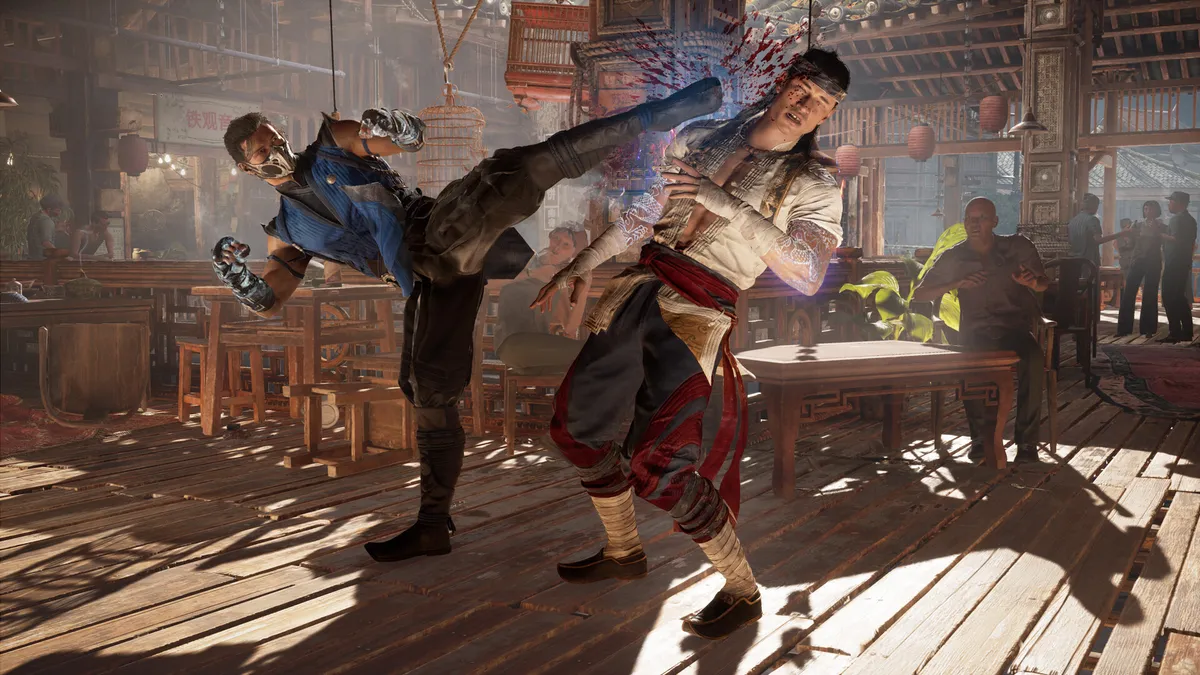
Tensions came to a head in the early 1990s, when games such as Doom, Mortal Kombat, and Night Trap helped ignite a moral panic over violent and sexual content. A series of congressional hearings began in December 1993, raising the possibility that the US government might regulate the industry directly.
Under growing political pressure, game publishers were compelled to act. To avoid government intervention in the distribution and marketing of video games, the industry established the Entertainment Software Rating Board, better known as the ESRB.
Its premise was relatively simple: publishers would submit information and footage from their games, and the ESRB would assign an age rating, content descriptors, and, eventually, notices about elements such as in-game purchases.
This system worked reasonably well for about 30 years. Public debates about violent video games never disappeared entirely, but they gradually became less prominent. From a publisher’s perspective, however, the system has an obvious disadvantage: clearly disclosing potentially objectionable content may discourage some consumers from buying a game.
For example, a parent may be less likely to purchase a game containing mature themes or in-game purchases. Publishers, whose goal is to maximize revenue, would obviously prefer not to lose those sales, which might be the reason they seemingly started to exploit weaknesses in the ESRB system, even though it was created partly to prevent the kind of government intervention that could restrict their ability to sell games in the first place.
One of the clearest examples I have noticed involves Bandai Namco and the release of Tekken 8. The game now features an in-game shop in which players can spend real money on cosmetic items for their characters. These items include, to the bewilderment of many players, a nearly perfect sphere that looks suspiciously like something taken directly from an asset store.
The shop, however, was not available when the game launched, nor was it present in the review copies sent to the press. Consequently, early reviews did not discuss it, and the game’s original ESRB information did not disclose in-game purchases. Some players therefore bought the game believing that its post-launch monetization would be limited to conventional downloadable content, such as additional characters and stages.
A few weeks after launch, Bandai Namco announced and added the in-game shop, and the ESRB listing was updated accordingly. By that point, however, a substantial portion of the game’s launch-period sales had presumably already been made. The publisher had therefore avoided some of the negative publicity that might have accompanied the inclusion of microtransactions from the beginning.
It is difficult to know how much attention the average player pays to ESRB disclosures today. Nevertheless, delaying the announcement of the shop likely benefited Bandai Namco. Even if the company’s only intention was to avoid bad publicity during the review and launch periods, reducing that negative coverage could still have helped sales.

There is a certain irony in the fact that fighting games helped inspire the creation of the ESRB and are now providing one of the clearest examples of how its disclosure system can be circumvented.
Naturally, Tekken 8 faced harsh criticism from players who regarded Bandai Namco’s actions as anti-consumer. The backlash does not appear to have caused the company significant commercial harm, however. Tekken 8's sales, funnily enough, probably suffered the most through some very unpopular balance changes the devs made over the years.
That may encourage other publishers to adopt similar tactics. From a purely financial perspective, why disclose an unpopular monetization system before launch when it can be added later with few apparent consequences?
If publishers begin treating the ESRB’s rules as optional, governments may eventually step in and regulate the industry more aggressively. Belgium, for example, has already treated certain paid loot-box systems as a form of gambling, leading publishers to remove or disable them in games sold there.
If the US video game industry can no longer regulate itself reliably, some form of government oversight may fill the gap. Germany already has a legally grounded age-classification system administered through the USK. Yet even the USK’s current listing for Tekken 8 does not appear to mention the game’s post-launch microtransactions, illustrating how difficult it can be for any rating system to keep up with games that change after release.
This raises a broader question: how would a government agency approach the classification of video games?
Germany’s historical treatment of violent games offers a cautionary example. In the past, games could be denied an age classification or placed on Germany’s index of media considered harmful to minors. In practice, this severely restricted their advertising and sales. Publishers sometimes released censored versions to avoid those restrictions.

The original Dying Light, despite being widely praised elsewhere, did not receive a conventional German release because of its violent content. This later led to a bizarre situation involving the Platinum Edition on the Nintendo eShop. Because Nintendo’s European digital operations were tied to Germany, the game was temporarily unavailable through the eShop across Europe, rather than only in Germany.
A future US government-controlled system could classify games very differently from the ESRB. Under the current Trump administration, for example, there is reason to wonder whether political values might influence decisions about what kinds of content are considered acceptable. An administration could target exceptionally violent games such as Mortal Kombat or games containing social and political themes with which it disagrees.
That possibility would inevitably affect game development, particularly for companies based in the United States. Publishers investing tens or hundreds of millions of dollars in a project would be reluctant to risk having it restricted or prohibited after completion. Even the possibility of such action could encourage developers to censor themselves.
If publishers continue exploiting weaknesses in the ESRB system, the current arrangement is unlikely to remain stable forever. Should the ESRB lose its credibility or authority, debates over censorship, regulation, and consumer protection would inevitably return. This time, publishers would have a much weaker argument for being allowed to regulate themselves.
Will the ESRB eventually be dissolved? Should it be? Frankly, I do not know. But the choice between maintaining a system that companies can manipulate at the expense of consumers and replacing it with an unpredictable government-controlled alternative is hardly an appealing one.